
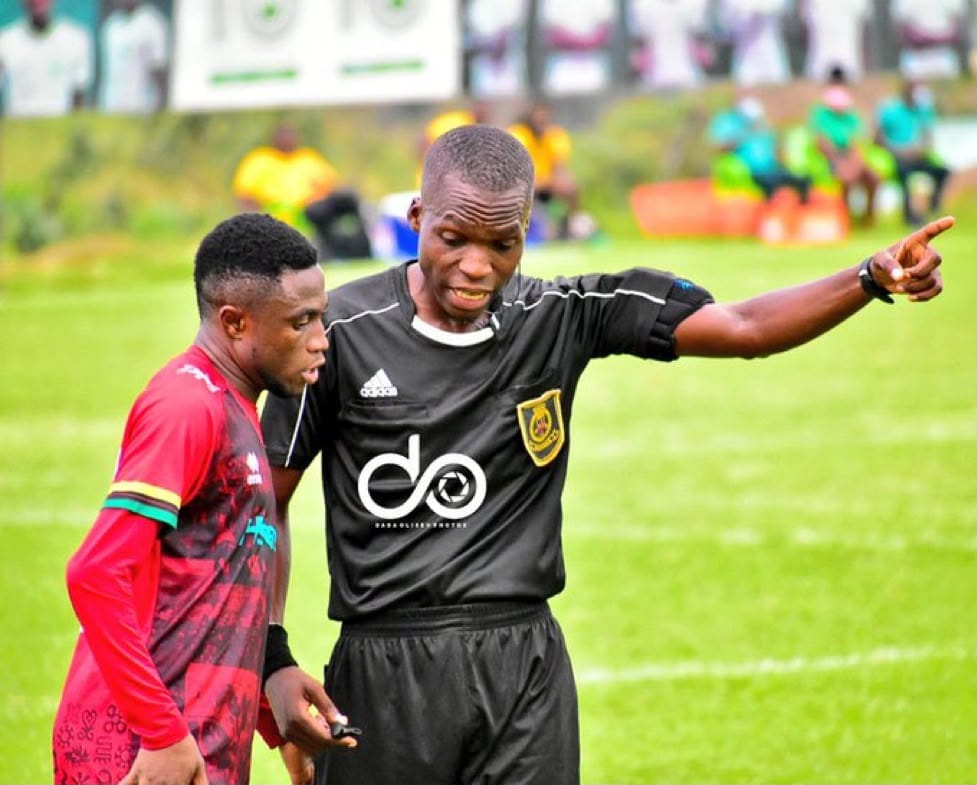
FIFA referee Emmanuel Dolagbanu has commended the Ghana Football Association (GFA) for its commitment to the welfare and long-term development of match officials, saying the Association continues to invest in referees beyond their active careers.
Speaking in an interview with Kessben FM, Dolagbanu described the leadership of the GFA as a strong support system, revealing that officials are encouraged to prepare for life after refereeing through education and career development.
“The people at the Ghana Football Association are like fathers to us. They provide us with everything we need, even beyond football. I remember when I needed a recommendation letter to begin law school—Prosper personally supervised the process for me.”
The experienced referee explained that the GFA’s approach extends far beyond officiating matches, with deliberate efforts to equip referees for future roles within the football industry.
“They always look beyond what we do on the field and think about how we can continue to contribute to football after our refereeing careers. Because of the Anas exposé, many of the older referees were unable to continue working within the football ecosystem. That’s why the GFA is helping us prepare for other roles, whether as instructors, administrators, or in any other capacity within the game.”
Dolagbanu’s comments come at a time when several Ghanaian FIFA referees, including Daniel Laryea, Latif Adaari, Barikisu Yonah and others, were unable to meet the required standard during the recent FIFA fitness assessment.
While acknowledging the importance of maintaining high fitness standards, Dolagbanu believes one area that requires attention is the scheduling of the fitness tests.
“One thing I would like the authorities to address is the timing of the fitness test. It should be scheduled closer to the start of the league season. Players are given a mandatory one-month break before returning for pre-season, but referees don’t enjoy the same privilege, which becomes a challenge because we rarely get enough time to rest.”
He added that aligning the tests with the start of the football season would allow referees to recover properly before beginning preparations.
“For example, if the league starts in September, the fitness test should be held in August so that referees can also have adequate time to recover before the new season begins.”
Despite the recent setback, Dolagbanu’s remarks highlighted the GFA’s continued efforts to support referees both professionally and personally while calling for adjustments that could help officials perform at their highest level.